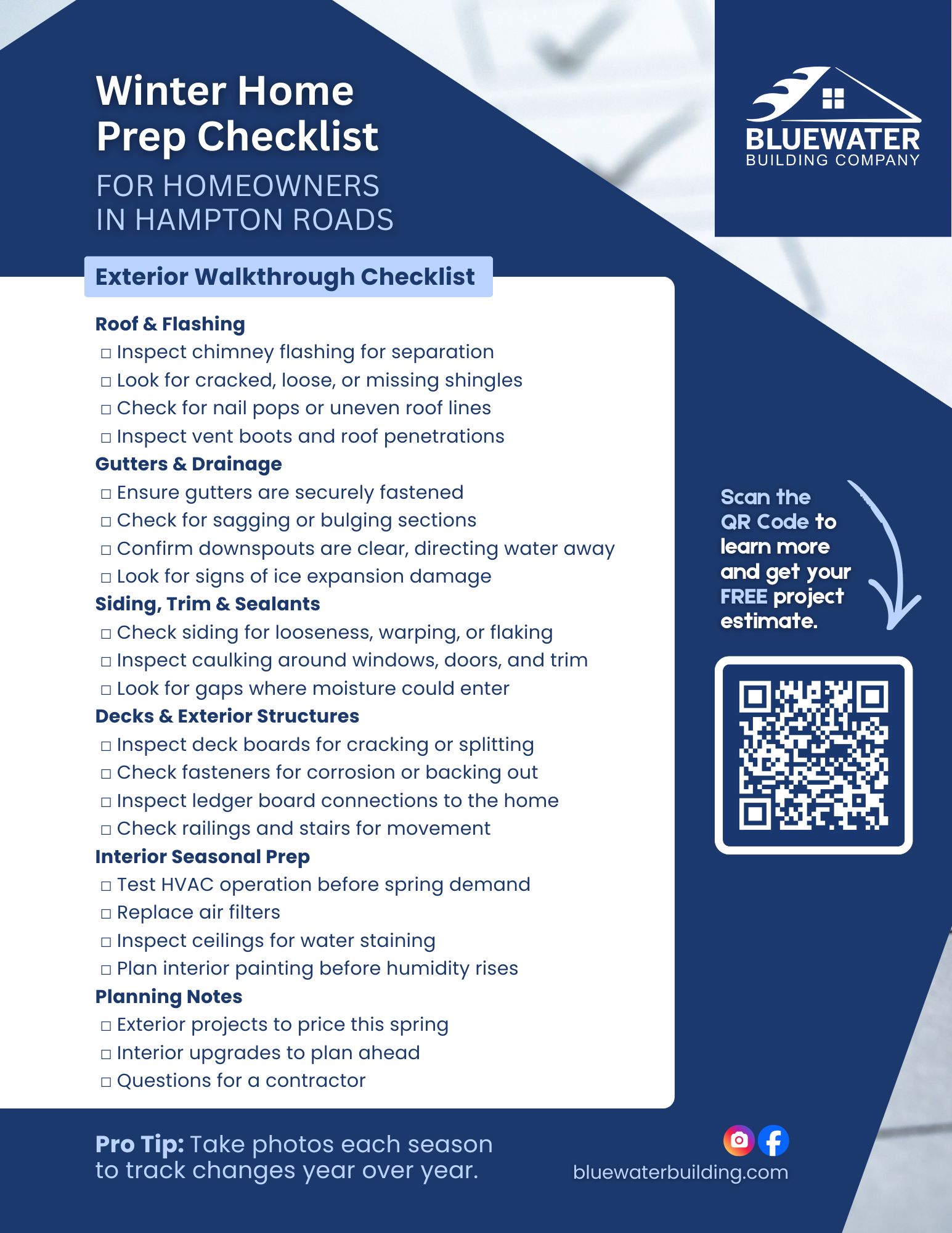
In Hampton Roads, spring doesn’t ease in; it shows up fast.
One week it’s cold and dry. Next, you’re dealing with heavy rain, high humidity, and pollen coating everything from your car to your roofline.
For homeowners in places like Poquoson, where homes sit closer to water, or Norfolk’s historic neighborhoods, where aging structures require more attention, spring is not just a seasonal shift; it’s a stress test.
And what most homeowners don’t realize is this:
The damage you see in late summer often starts in early spring.
This is the window where small issues are still manageable, before humidity, storms, and heat amplify them.

In coastal Virginia, your roof takes the brunt of winter wind events and early spring storms.
Areas like Virginia Beach and Poquoson often experience stronger wind exposure due to proximity to open water, which can loosen shingles or compromise flashing without obvious signs from the ground.
Shingles that are lifted, missing, or out of alignment
Flashing around chimneys and vents that show separation or corrosion
Granule accumulation near downspouts (a sign of shingle wear)
Dark streaking or uneven coloration indicates moisture retention
Interior ceiling stains or attic dampness after rain
Homes across Williamsburg and Norfolk with mature tree coverage often experience additional debris accumulation on roofs, especially after late-winter storms. This can trap moisture and accelerate deterioration.
Spring rain in Hampton Roads is consistent, and once summer arrives, storms become more intense. A small vulnerability in March can become an active leak by June.
Make a list. Take photos. Don’t panic.
Even if you don’t act immediately, documenting conditions gives you leverage with contractors, insurance, and future planning.

If there’s one system that quietly causes the most damage in Hampton Roads homes, it’s the gutter system.
Between falling debris and heavy pollen in the spring, gutters clog quickly—especially in older neighborhoods like Ghent or Colonial Place in Norfolk, where tree canopy is dense.
Gutters filled with debris or compacted pollen buildup
Sagging sections or loose fasteners
Downspouts that discharge too close to the foundation
Water overflow marks along fascia boards
Standing water in gutter runs
In Poquoson and low-lying areas of Virginia Beach, improper drainage can compound with naturally high water tables, increasing the risk of moisture intrusion near foundations.
Water that isn’t directed away properly doesn’t disappear—it collects. Over time, that leads to wood rot, foundation issues, and siding damage.

Siding systems in Hampton Roads face a combination of moisture, heat, and biological growth.
If you’ve seen green or dark streaking on homes in Norfolk or Williamsburg, that’s not uncommon—it’s often algae or mildew thriving in humid conditions.
Warped or loose siding panels
Visible mold, mildew, or algae growth
Cracked or failing paint or finishes
Gaps at seams or around penetrations
Soft or deteriorating trim areas
Clean siding surfaces where buildup is present
Re-seal or repaint vulnerable areas
Replace sections showing structural compromise
Homes surrounded by shade or near water—common in Poquoson and river-adjacent Norfolk neighborhoods—tend to retain moisture longer, increasing the likelihood of siding degradation.
Spring is when seal failures become more noticeable due to temperature swings and humidity increases.
Cracked or deteriorating caulking around frames
Gaps in weatherstripping
Condensation between panes (indicating seal failure)
Difficulty opening or closing windows
Exterior trim showing signs of moisture exposure
Homes near the coast, especially in Virginia Beach, experience additional stress from salt air, which can accelerate deterioration of seals and exterior finishes.
Unchecked window issues don’t just impact comfort—they allow moisture intrusion, which in Hampton Roads’ humidity can quickly lead to mold-related concerns.

Spring is not just a maintenance season, it’s a decision point.
By early summer:
Humidity rises significantly
Storm activity increases
Contractor availability tightens
Repair costs often increase
Addressing issues now allows homeowners to:
Avoid emergency repairs during peak season
Extend the lifespan of major systems
Maintain property value in a competitive housing market
If you’re noticing:
Water stains or active leaks
Structural movement in gutters or roofing
Persistent moisture or mold on siding
Window seal failures
…it’s worth getting a professional evaluation before conditions worsen.
In Hampton Roads, homes don’t fail overnight.
They wear down gradually through moisture, wind, and time.
Spring is your opportunity to interrupt that process.
This guide is designed specifically for homes in Norfolk, Virginia Beach, Williamsburg, and Poquoson, with a step-by-step exterior walkthrough you can use immediately.
Identify early warning signs of moisture, weather exposure, and seasonal wear, so you can plan smarter and stay ahead of repairs.