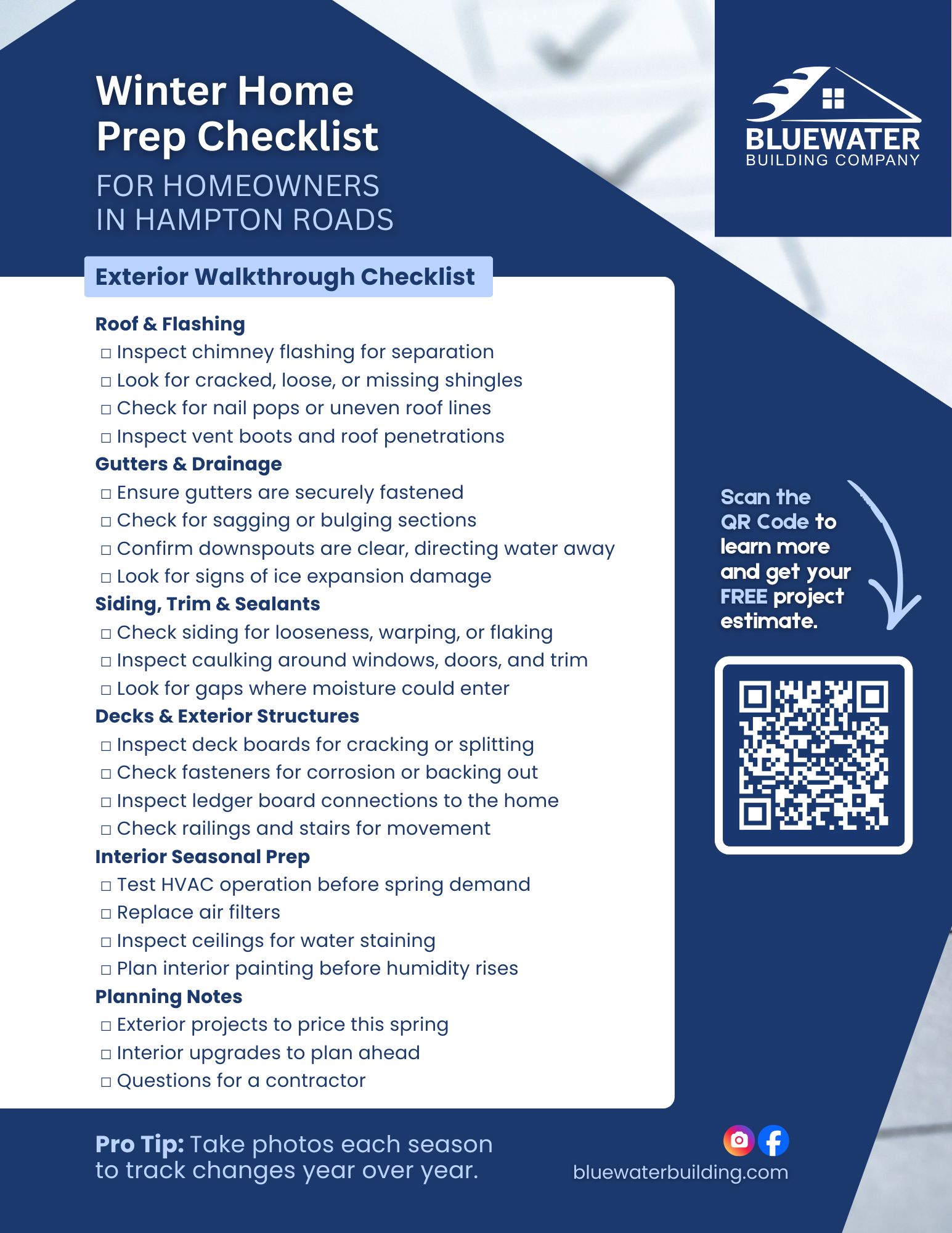
That’s why winter home prep in Hampton Roads isn’t about reacting to damage; it’s about learning how your specific home responds to cold snaps, moisture, wind, and expansion, so you can stay ahead of problems before spring and summer put pressure on both your house and contractor schedules.
Let’s take a practical walk, builder style.
Open your phone’s Notes app or grab a piece of paper. You’re not trying to fix anything today; you’re observing.
Your goal is to understand:
● Where your home holds up well
● Where seasonal stress shows first
● How location affects wear
You’ll use this same checklist year after year.

Poquoson homes deal with moisture pressure, wind exposure, and freeze–thaw cycles more than they do with dramatic temperature swings.
Pay close attention to:
Roof penetrations (chimneys, vents, flashing)
Siding seams and trim joints
Caulking around windows and doors
Deck boards and fasteners that may have expanded and contracted
If water has a way in, winter usually finds it.
Homes near the river experience constant wind-driven moisture, even without storms.
Add these checks:
Chimney flashing lifting from the rooflines
Fascia boards and soffits along wind-facing sides
Gutters pulling away or sagging
Deck connections to the home
Wind doesn’t just push rain; it pushes water sideways into weak points.
Oceanfront homes age faster. Period.
Salt air accelerates:
Corrosion of fasteners
Sealant breakdown
Check closely for:
Rusting nails or hardware
Loose shingles or tabs
Caulk that looks dry, brittle, or cracked
If something looks “a little off,” it usually is.

Make a list. Take photos. Don’t panic.
Even if you don’t act immediately, documenting conditions gives you leverage with contractors, insurance, and future planning.
Winter is the smartest time to:
Start conversations
Get rough estimates
Explore material options
Why this matters:
Contractor schedules fill fast
Material pricing often rises with demand
Early planners get more flexibility
You don’t need to commit, just get informed.
Winter is also the best time to handle interior items that become inconvenient later.
Focus on:
Testing HVAC systems before heavy use
Replacing filters and checking airflow
Planning interior painting before humidity spikes
Creating a simple spring maintenance checklist
These steps prevent last-minute calls during peak season, when everyone else is scrambling.

Different homes fail differently:
Poquoson: Moisture intrusion and ground-level exposure
Norfolk riverfront: Wind-driven rain and structural connections
Virginia Beach oceanfront: Corrosion and accelerated material fatigue
The common thread?
Small issues become expensive when ignored.
Prepared homeowners make calmer, smarter decisions.
Your home doesn’t need fear; it needs attention.
A seasonal walk, a running list, and early planning allow you to:
Catch moisture issues early
Extend the life of your home
Avoid peak-season pressure
Save real money over time
Winter home prep in Hampton Roads is how homeowners stay ahead, not catch up.
Riverfront homes in Norfolk: wind-driven rain and flashing failures
Oceanfront homes in Virginia Beach: salt air corrosion and accelerated wear
Poquoson sits right in between; moisture and wind are the real drivers.
Built for Hampton Roads homes, this Winter Home Prep Checklist helps homeowners identify early warning signs of moisture, weather exposure, and seasonal wear, so you can plan smarter and stay ahead of repairs.